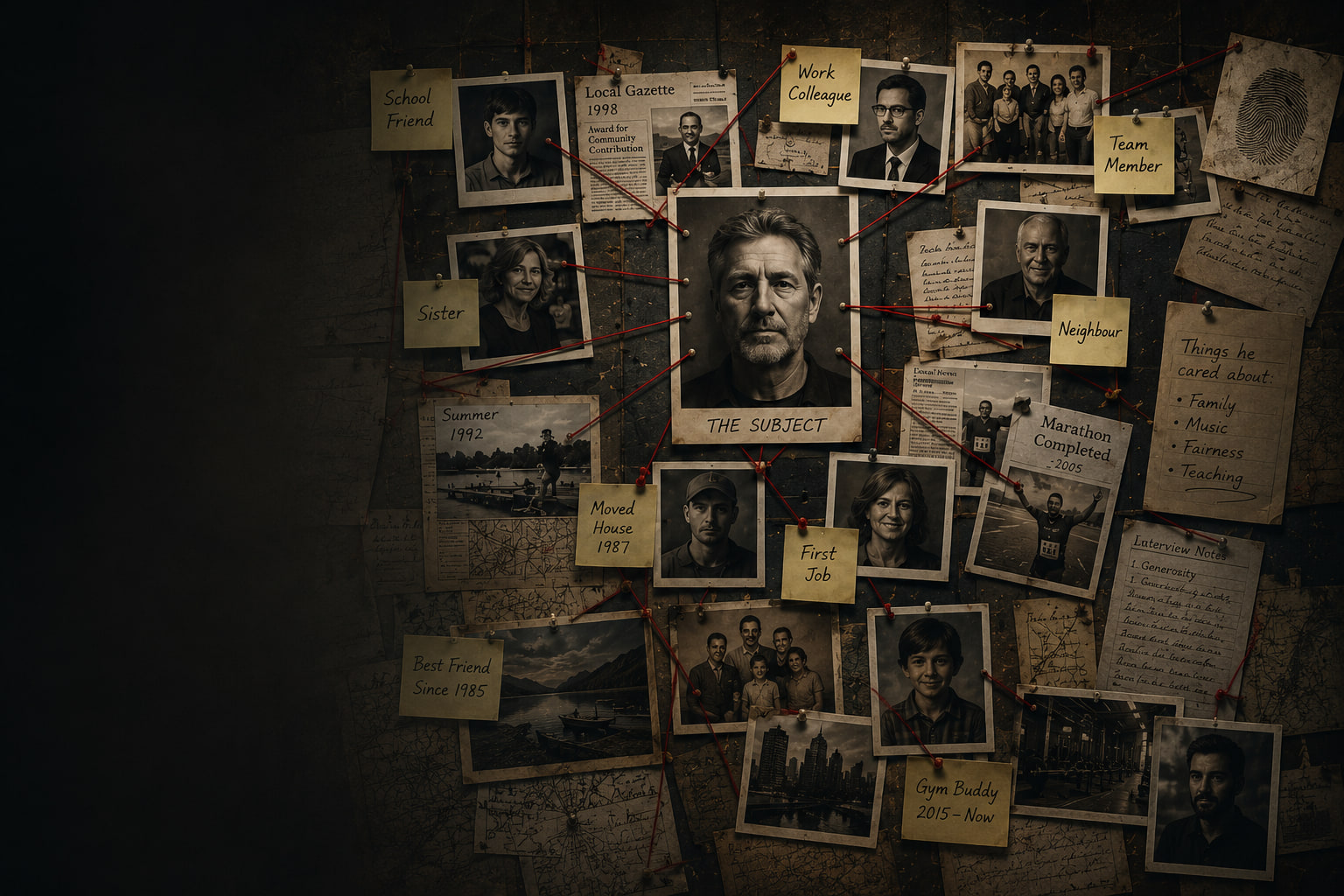
Before hard drives, cloud storage, social media and smartphones, the primary storage medium for memory was people.
Parents and grandparents.
Aunts and uncles.
Then we also had extended friends and neighbours.
All forming communities of knowledge and memories, each carrying a different part of the archive.
No single person possessed the entire archive.
Yet together they often held far more understanding than any photograph, letter or keepsake ever could.
This was the Human Archive.
Unlike a traditional archive, it was never stored in one place. It existed across multiple people, perspectives and experiences.
The Human Archive was never stored in one place.
Each individual carried a different piece of continuity, with pieces overlapping while others may have contradicted one another.
The Human Archive was not simply distributed across people.
It was also distributed across time.
A school friend may know a version of the subject that their children never experienced.
A spouse may understand moments that happened decades later.
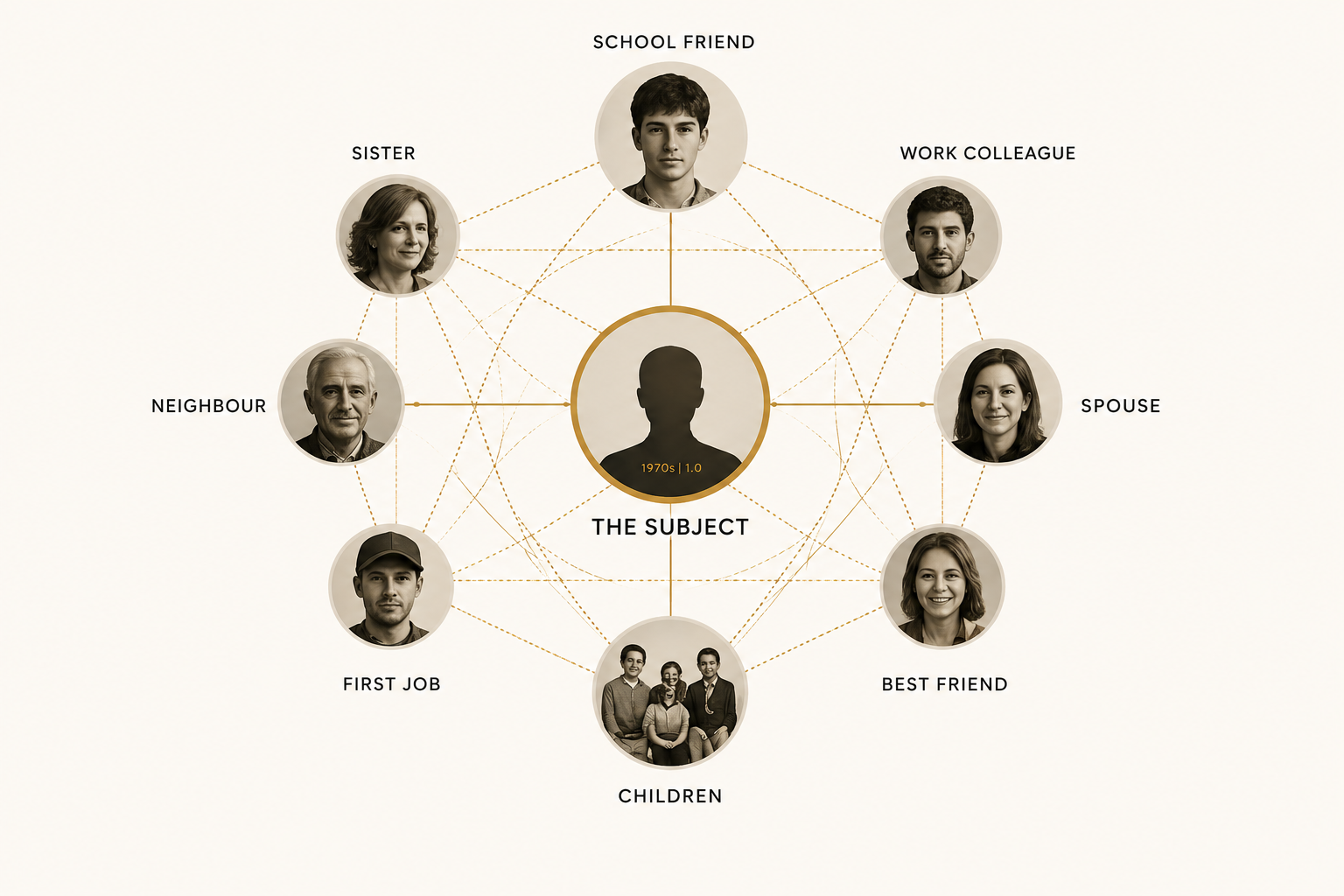
A work colleague may remember achievements unknown to family members.
A neighbour may remember a completely different side of the same person.
Even the subject themselves changes with time.
The person at twenty is not quite the same person at forty.
The person at forty is not quite the same person at seventy.
Yet all of these versions form part of the same story.
The strength of the archive was not found in a single memory.
It emerged from the connections between them.
The more people who shared understanding, the richer continuity became—and this is why families often discover that memories change when relatives gather together.
“One story unlocks another. One detail triggers a forgotten memory. A photograph that seemed ordinary suddenly becomes meaningful because somebody remembers what was happening just outside the frame, creating a rich tapestry of meaning and understanding.
The Human Archive was never perfect because people forget and people remember events differently.
And yet these imperfections are not weaknesses because the meaning was preserved.
Different perspectives do not weaken continuity. They strengthen it.
They are often where perspective is created.
A complete understanding of a life rarely comes from a single source. It emerges from many people, remembering different moments, across different periods of time.
Because no single person remembers a life.
Communities do.Continue Exploring