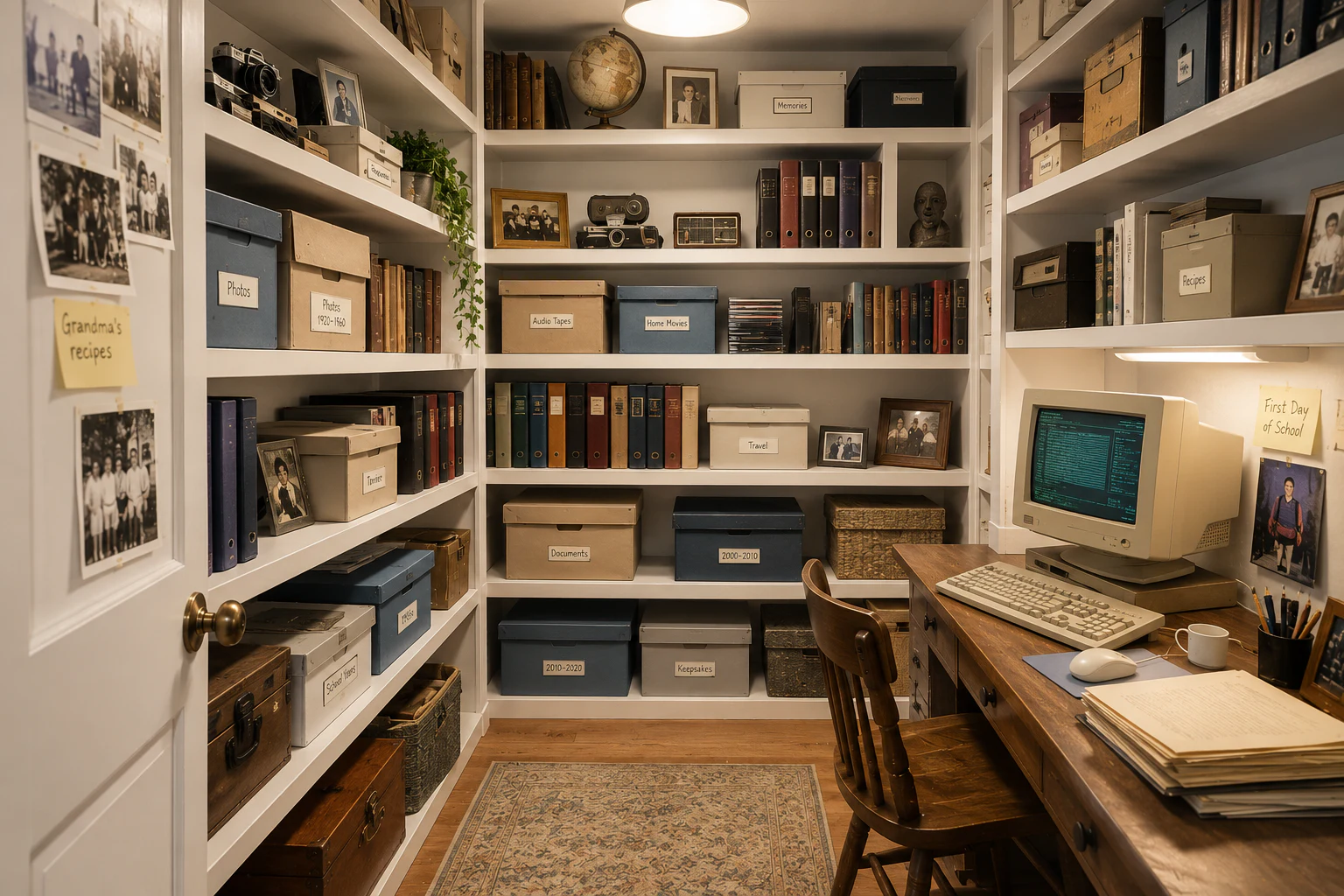
For most of human history, preserving memories was relatively simple.
The Egyptians built pyramids. The Romans raised monuments. Families kept photographs in boxes, letters in drawers and important documents together in cupboards. Stories were carried by parents, grandparents, aunts, uncles and friends.
The archive was often incomplete, fragile and disorganised, but it was usually held together.
More importantly, the more people who shared those memories, the richer they became.
Today, we possess more photographs, videos and records than any generation in history, yet understanding may be becoming harder to preserve.
A single life can now be scattered across phones, cloud accounts, social networks, messaging apps, hard drives, email inboxes and in the memories of people who may now live on the other side of the world.
We have become exceptionally good at creating records of our lives, but far less deliberate about ensuring those records remain connected.
Nothing has necessarily been lost.
It is simply that everything has been separated.
This is the challenge that is beginning to emerge, and it is the challenge that Memory Continuity attempts to address.
The Great Fragmentation
Most people assume the greatest threat to memory is deletion.
A hard drive fails. A phone is lost. A box of photographs is thrown away.
These things happen, but they are often not the primary problem.
The modern challenge is fragmentation.
Photographs become separated from stories. Stories become separated from people. People become separated from generations. Archives become separated from families. Understanding becomes separated from context.
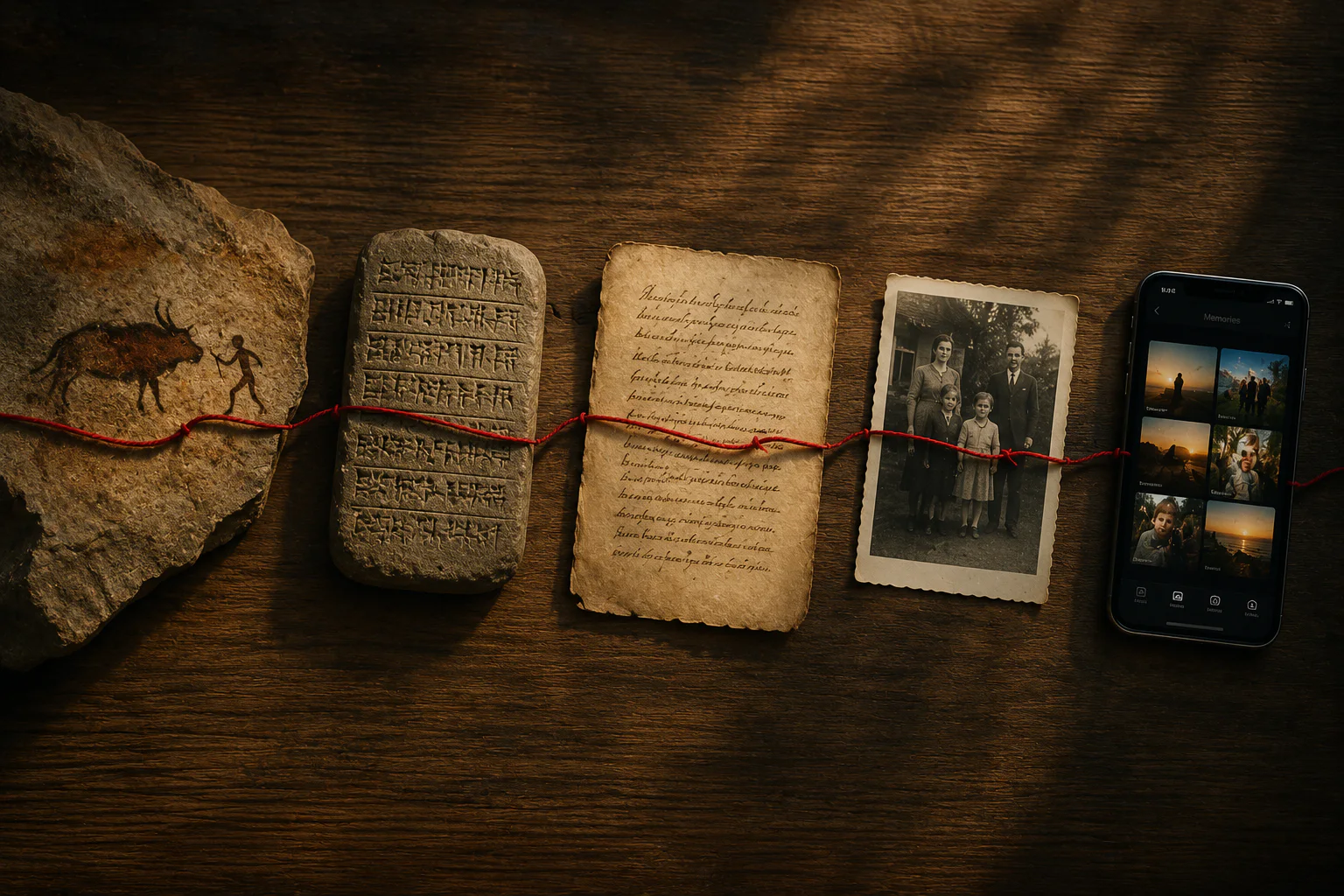
The result is a strange paradox. We have access to more information than ever before, yet future generations may still struggle to understand the lives that produced it.
A granddaughter may inherit ten thousand photographs and still find herself asking:
Who was this person?
The files survived.
The understanding did not.
Why Existing Categories Are Not Enough
The modern memory landscape is filled with valuable tools and services.
Some help us store photographs. Some help us tell stories. Some help families stay connected. Some help us research family history. Some help us collect memories from important events.
Each serves a useful purpose. Each solves a real problem. Yet each addresses only part of a larger challenge.
Storage helps files survive. Storytelling captures meaning. Family sharing encourages participation. Genealogy preserves historical understanding. Event collection gathers contributions.
None of these categories were designed specifically to solve continuity itself.
The problem is not that these tools fail. The problem is that continuity sits above them.
It concerns the relationship between them and helps them remain connected across time.
The Photo and the Data Centre
One way to understand this is through a simple analogy.
Think of the photo as the key and the mind as the data centre.
When someone looks at an old photograph, the image does not contain the entire memory. Instead, it unlocks information stored elsewhere.
One person sees a photograph and remembers a holiday, a conversation, a relationship and a feeling.
Another person sees the same photograph and recognises only a face.
A stranger may see nothing more than an unknown person standing in an unknown place.
The key remains the same. The data centre changes.
This helps explain why continuity weakens across generations.
The photograph survives, but the people who understood it do not.
Over time, the archive becomes quieter.
Not because the key disappeared, but because fewer people remain who can unlock its meaning.
The Assumption Problem
Many continuity failures begin with a simple assumption.
We assume we will remember. We assume somebody else will remember. We assume there will be time later. We assume the story is obvious and doesn’t need context. We assume somebody already knows.
Often, none of these assumptions prove true.
A parent intends to tell a story but never finds the moment.
A grandparent assumes a memory is unimportant because it feels ordinary.
A family member believes somebody else knows the details.
Years later, everyone discovers that nobody does.
Most memories are not lost through neglect.
They are lost through assumption.
And what that highlights is the missing piece: continuity.
Introducing Memory Continuity
Memory Continuity is the deliberate preservation of enough understanding that future generations can still know who somebody was, why they mattered and how their story connects across time.
Think about an old Polaroid photograph with a handwritten note on the back.
A date. A location. A short message. Perhaps just a name.
The information itself may be simple, but the handwriting, context and personal touch often become part of the memory itself.
That small addition transforms a photograph into something richer.
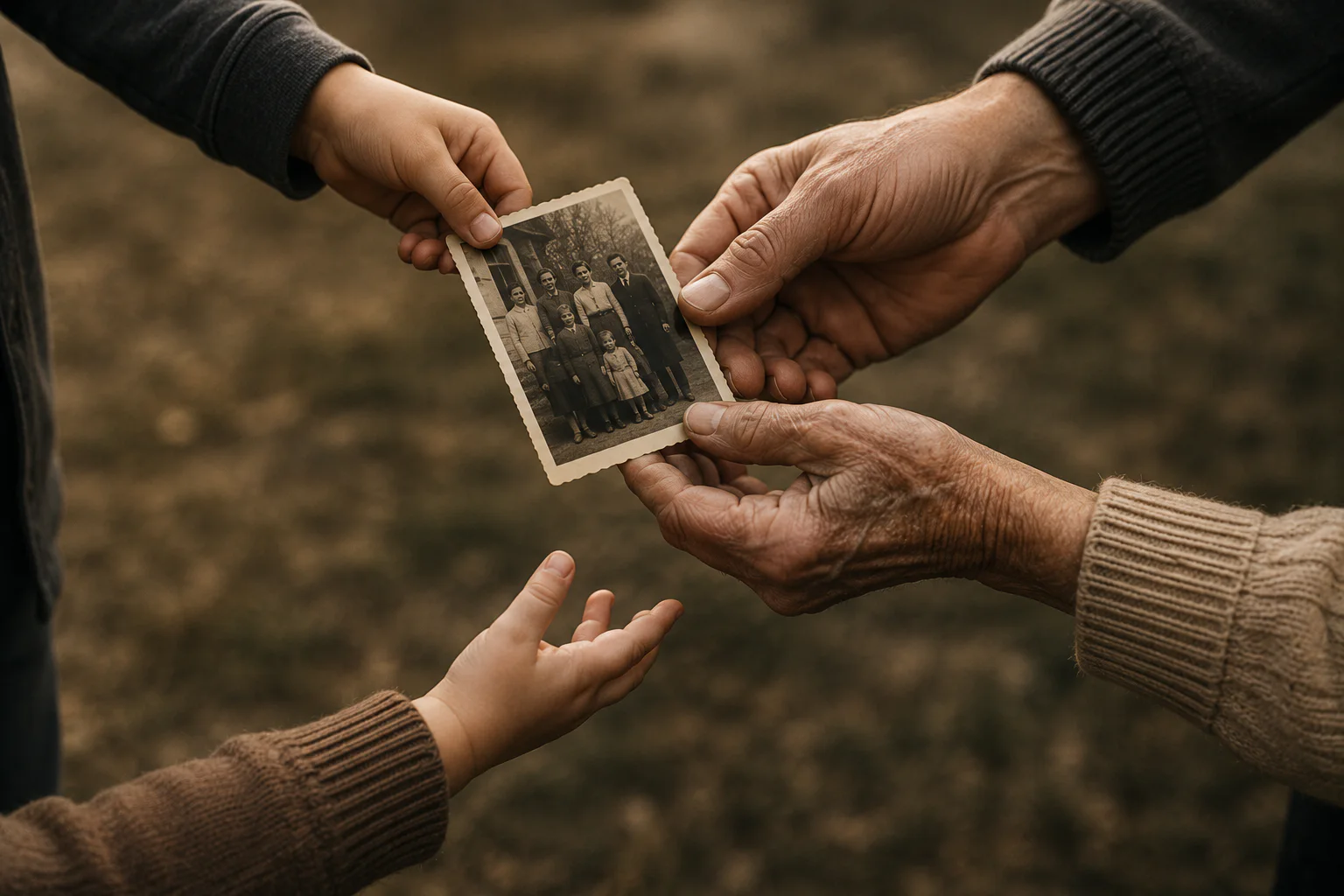
It’s not simply about preserving files. It’s about preserving understanding.
A perfectly preserved archive may still fail if nobody knows what it means.
Conversely, a small archive rich with stories, context and perspective can create a powerful sense of connection across generations.
The goal is not maximum storage.
The goal is meaningful continuity.
The Six Pillars of Memory Continuity
Memory Continuity rests on six connected pillars.
Collection
Gathering memories before they disappear into devices, accounts and forgotten locations.
Organisation
Structuring memories so they can be understood later.
Meaning
Preserving the stories, context and perspectives that give memories value.
Discovery
Ensuring memories can be found and rediscovered.
Succession
Planning for what happens when the original owner is no longer present.
Continuity
Keeping understanding connected across generations and time.
Each pillar supports the others. Weakness in one area can affect the strength of the whole system.
Why This Matters
For centuries, continuity was largely reserved for the wealthy, powerful and historically significant.
Kings had portraits. Monuments. Biographies. Court records. Handwritten letters.
Historians then used multiple perspectives, preserved by society through generations of record keeping, to reconstruct understanding.
Most ordinary people left behind far less.
Modern technology has changed that.
For the first time in history, ordinary families have the ability to preserve not only records, but continuity itself.
The challenge is no longer whether we can store memories.
The challenge is whether future generations will still understand them.
Because ultimately, continuity is not the preservation of photographs.
It is the transfer of understanding across time.