When people think about preserving memories, they usually focus on preservation.
How do we keep the photograph safe?
Where do we save the video? Should we back them up on a hard drive?
These are important questions, but I suspect they're overlooking another greater challenge.
Discovery and perhaps more specifically, awareness.
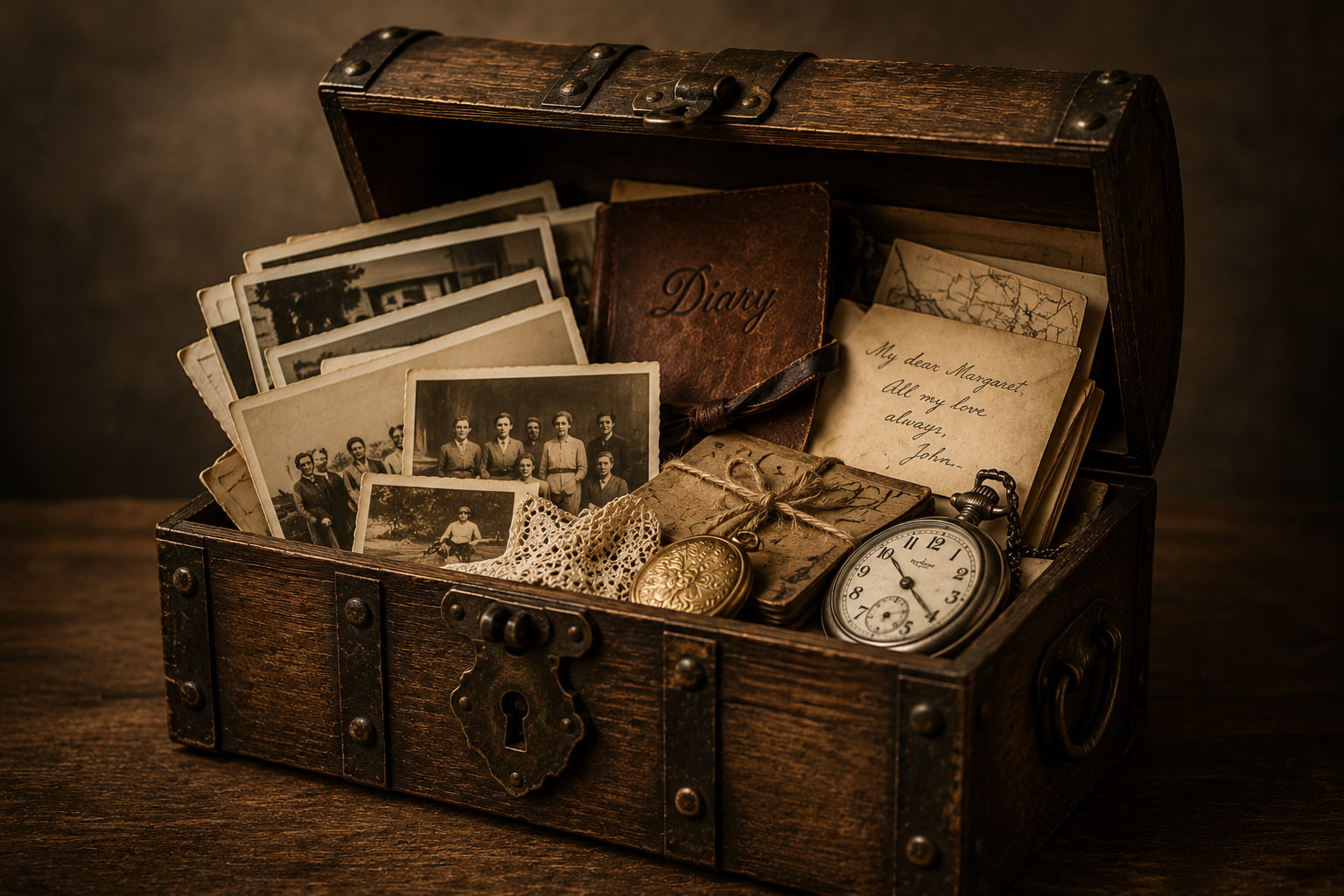
A hard drive full of family history can survive for decades next to a box of photographs in the attic completely untouched.
The diary forgotten sitting safely in a drawer.
The contents have been preserved, but unless somebody knows they exist, they are effectively lost.
Not destroyed or erased, just lost.
Because nobody even knows to look for them.
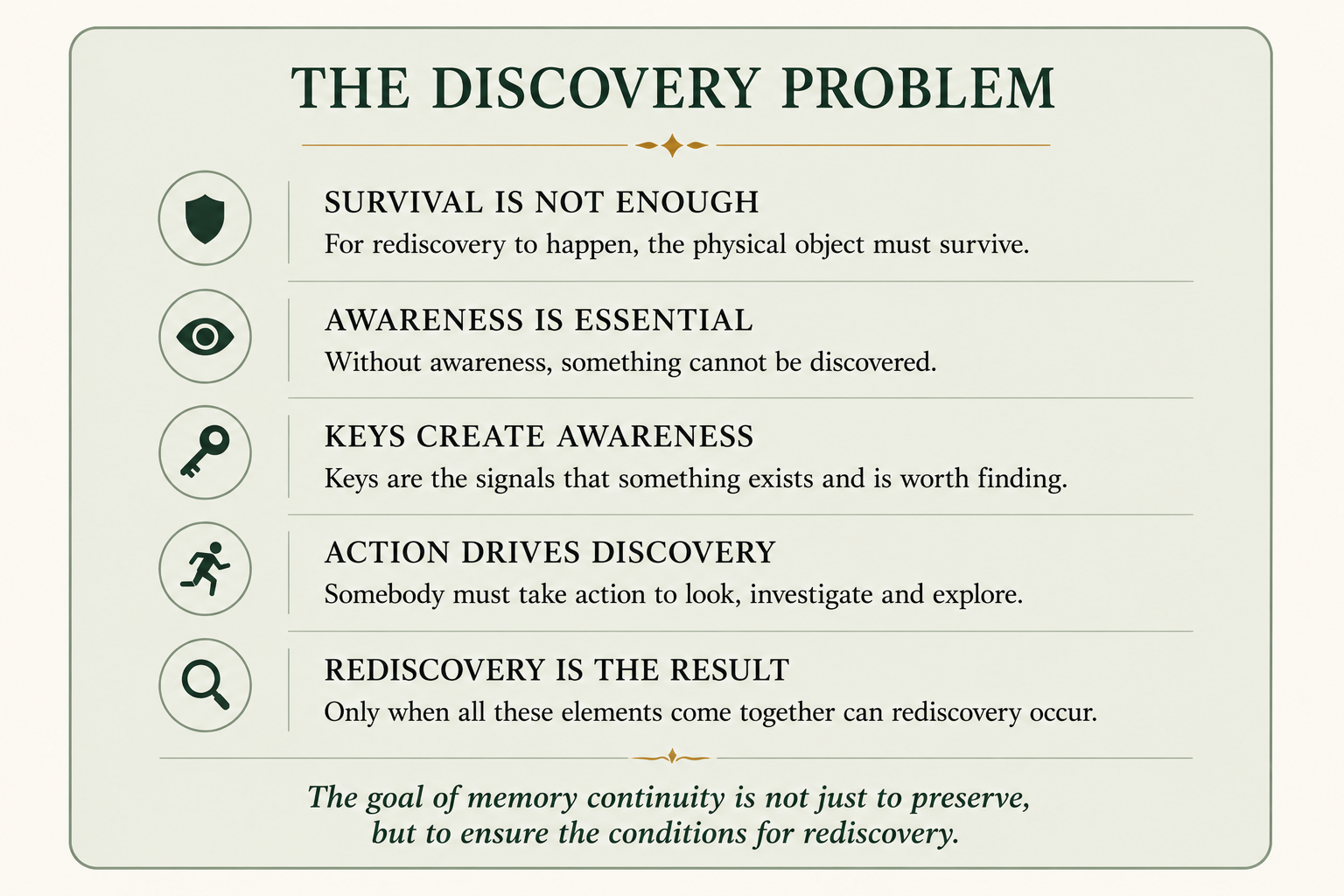
This is the Discovery Problem.
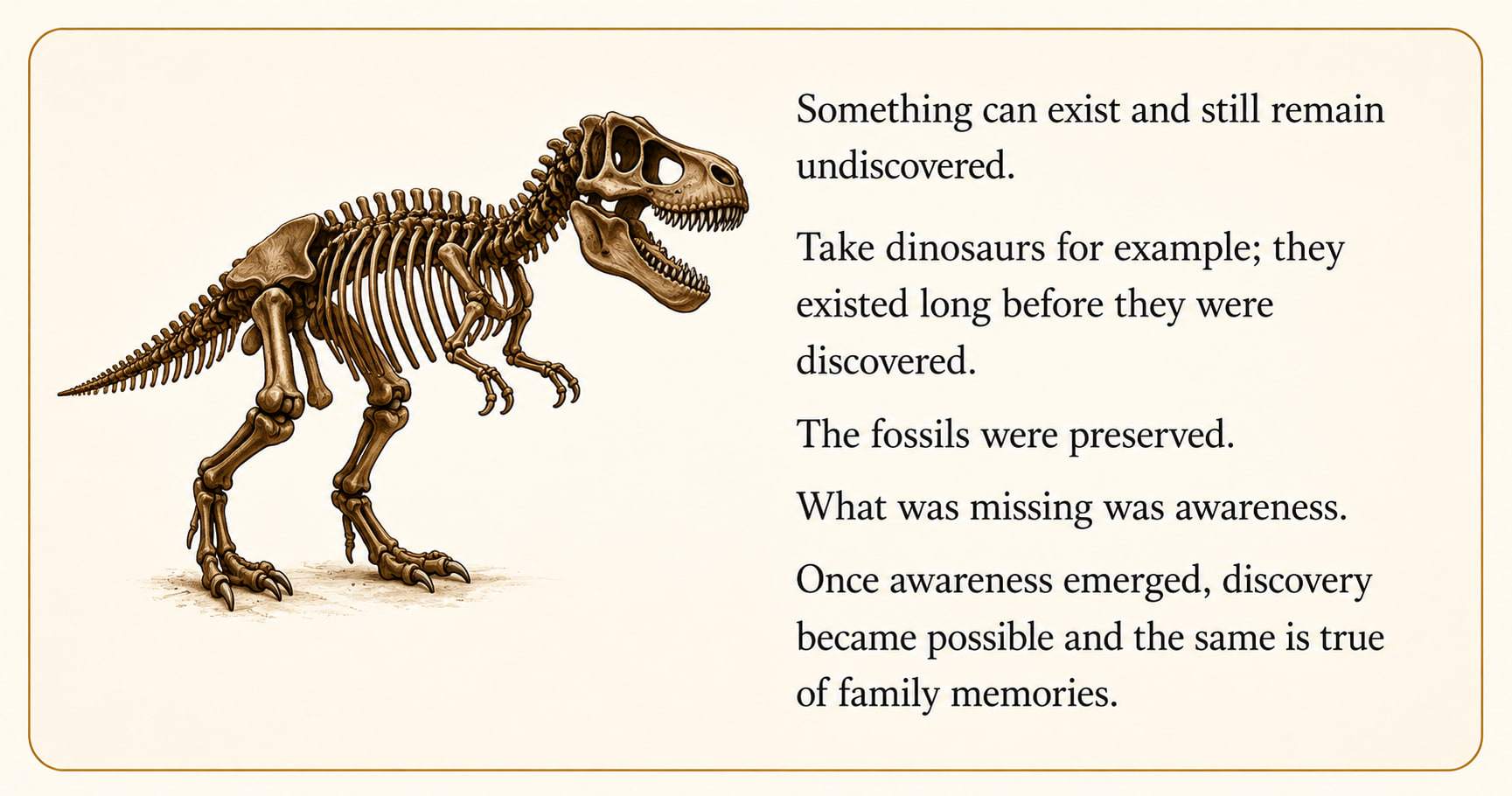
Something can exist and still remain undiscovered. Take dinosaurs for example; they existed long before they were discovered.
The fossils were preserved.
What was missing was awareness.
Once awareness emerged, discovery became possible and the same is true of family memories.
Future generations cannot search for something they do not know exists and before discovery must come awareness.
This suggests that continuity requires more than preservation.
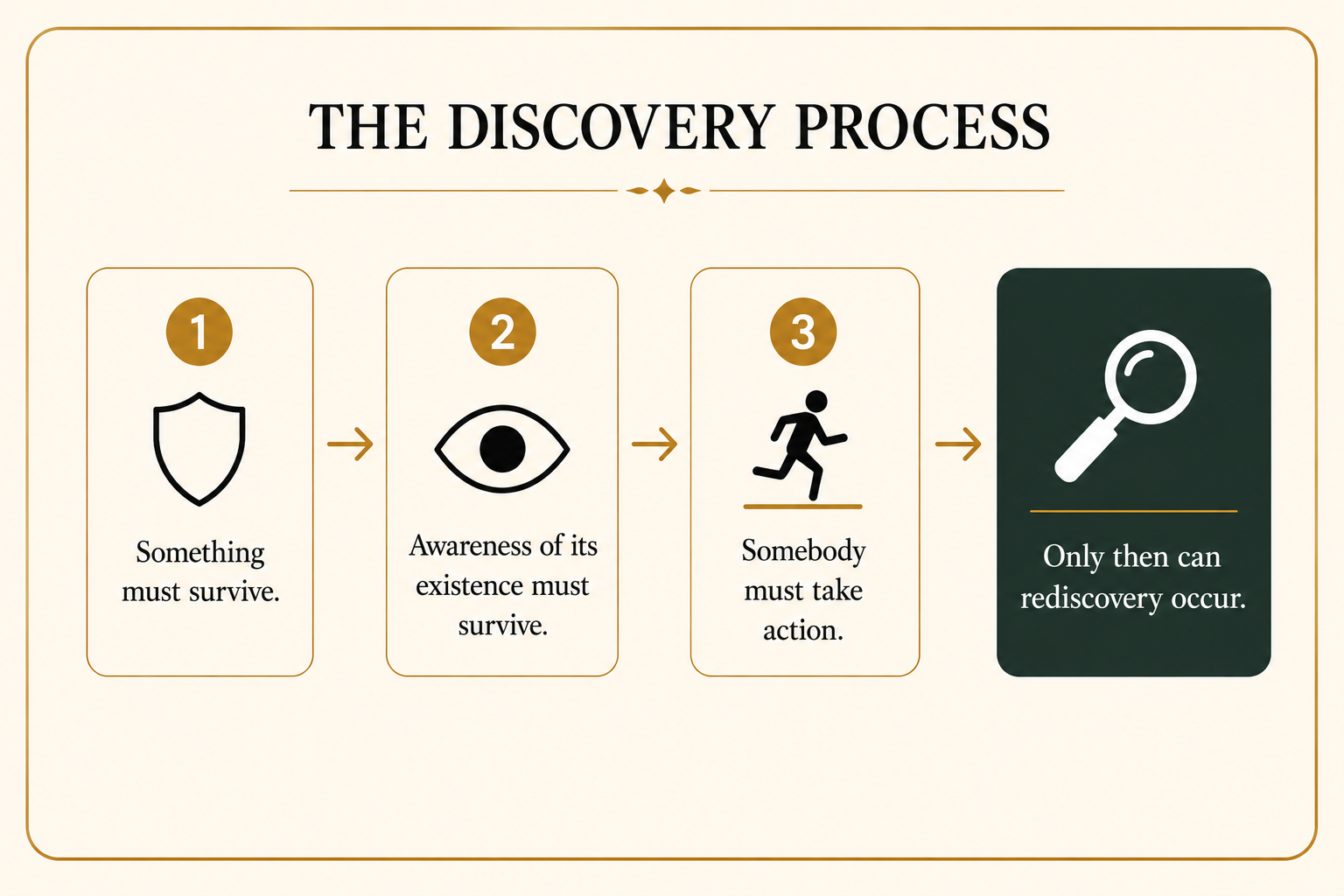
First, something must survive.
Second, awareness of its existence must survive.
Third, somebody must take action.
Only then can rediscovery occur.
We know dinosaurs existed but that awareness alone does not result in rediscovery.
A palaeontologist must still take action and go looking.
The same applies to family history.
A grandchild may know an archive exists, but until they choose to engage with it, rediscovery never happens.
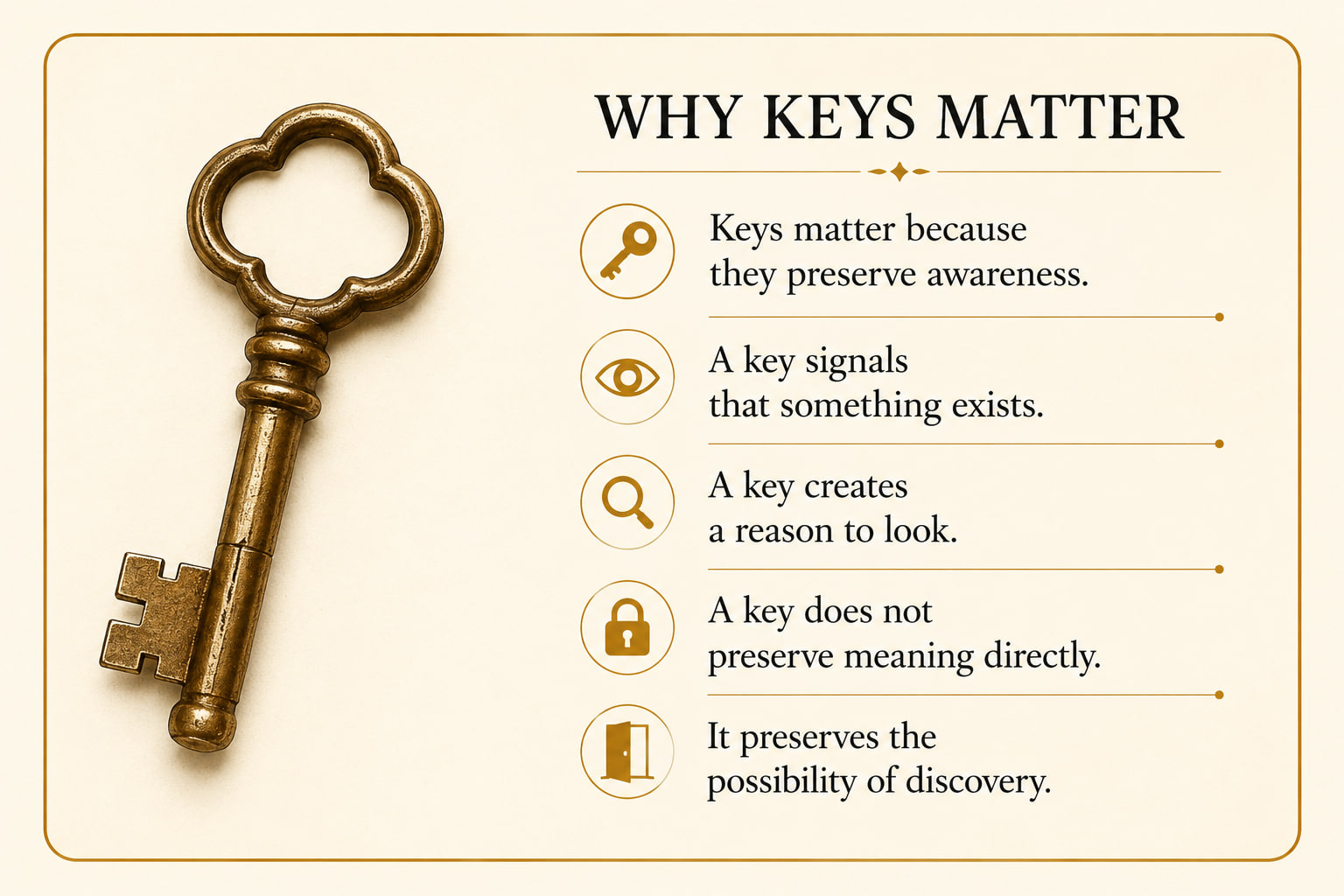
This is why keys matter because they're not simply a way of accessing an archive.
A key preserves awareness.
It signals that something exists and creates a reason to look.
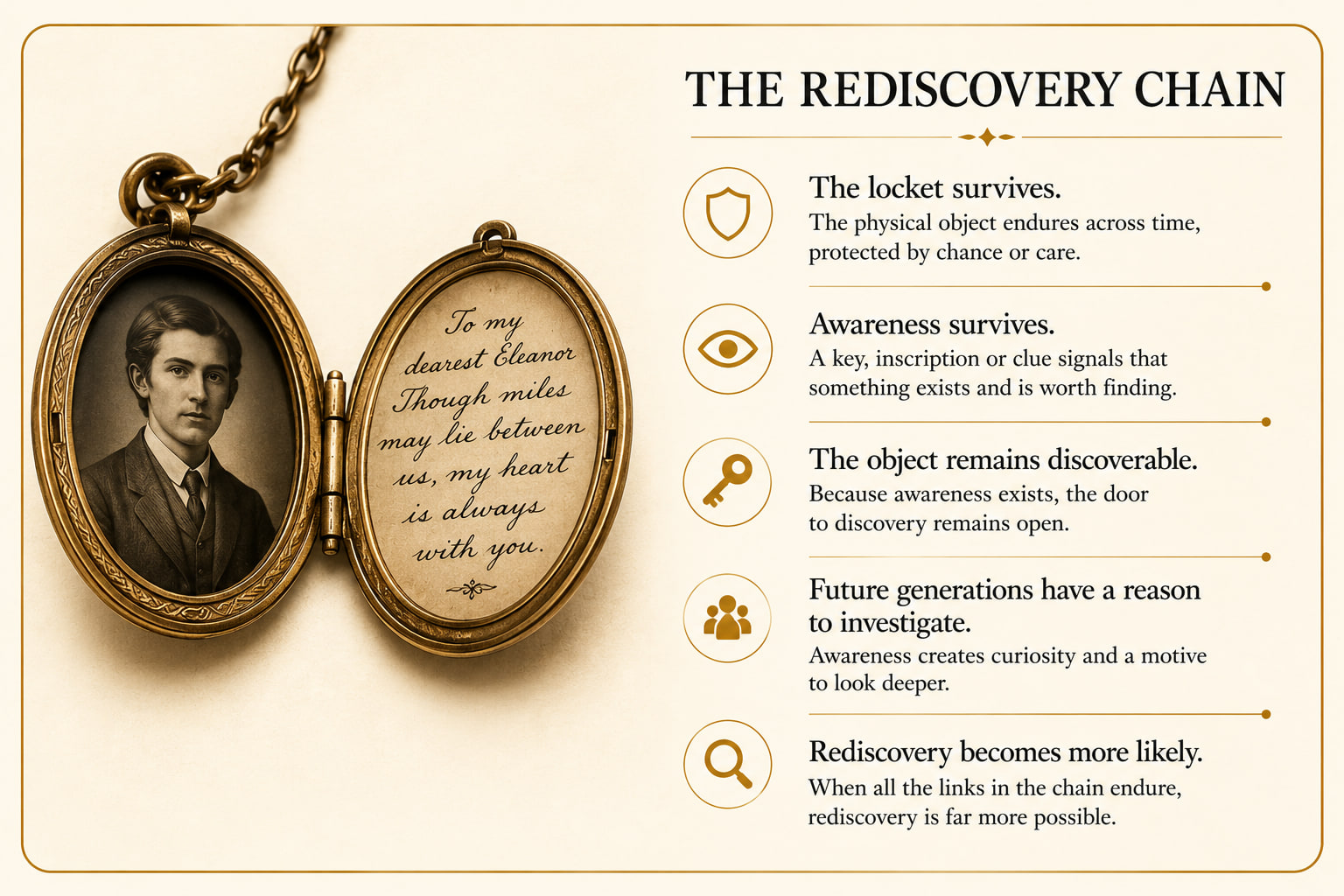
Consider a silver locket passed from a grandmother to her great-grandchild.
Inside is not a photograph, but a pathway, a key, even a digital pathway to a rich archive of family memories.
The locket itself may have little financial value.
Yet it is likely to be preserved because it is meaningful.
The physical object survives and awareness survives with it.
The child becomes the next custodian.
If several children inherit similar lockets, the likelihood of rediscovery increases further.
The archive may exist in one place, but awareness exists in many.
This raises another question.
What makes people want to rediscover something?
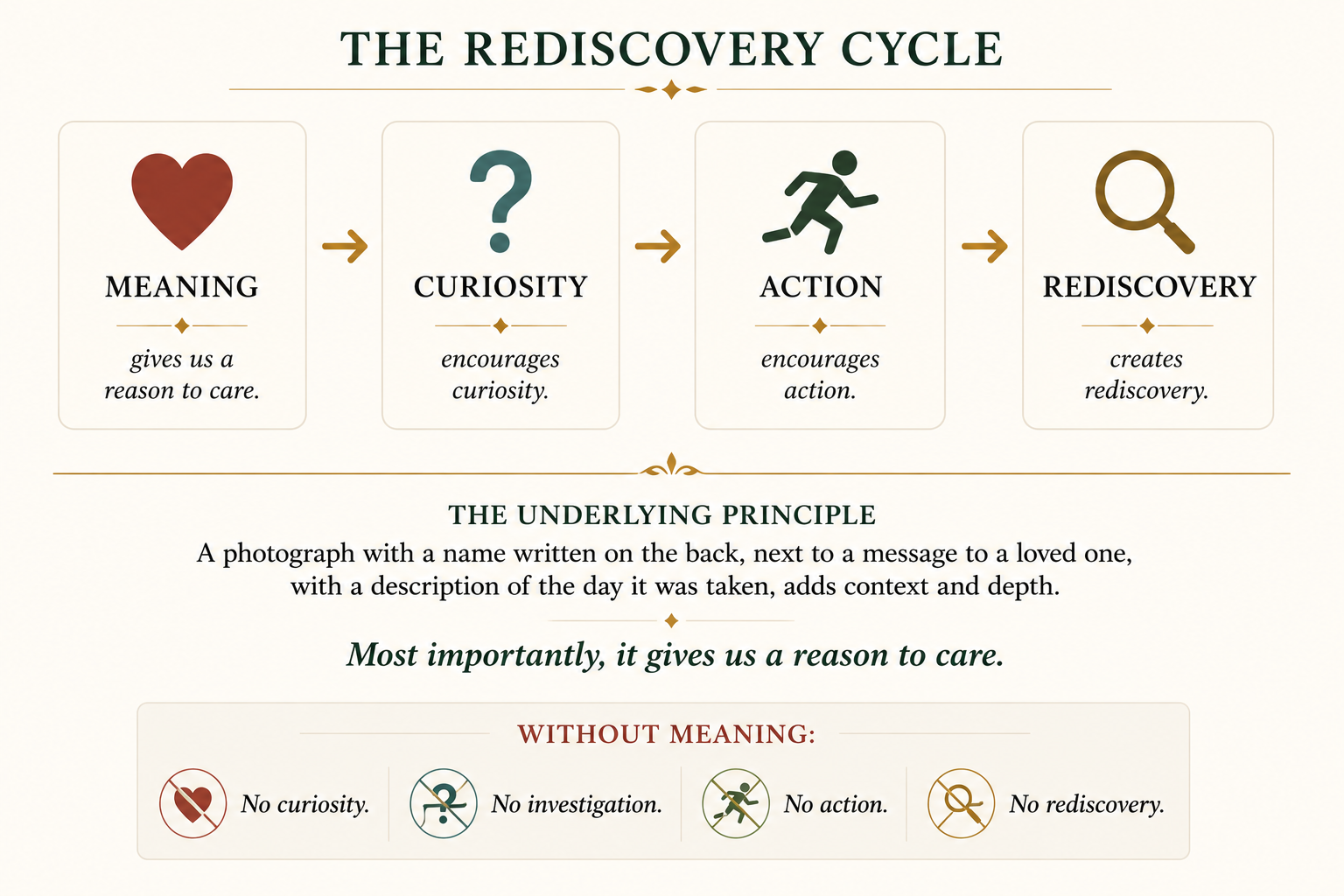
I don't believe it's volume, it's the meaning.
A photograph with a name written on the back, next to it a message to a loved one, with a description of the day it was taken, adds context and depth.
And most importantly gives us a reason to care.
These things encourage curiosity.
Curiosity encourages action.
Action creates rediscovery.
History repeatedly shows that discovery often begins with a single meaningful item.
A single object leading to a meaningful story has more gravity than an endless collection of uncurated material.
By adding meaning it helps make people want to know more.
The Discovery Problem reminds us that preservation alone is not enough.
We must also consider who we expect to discover these memories in the future and how they will become aware that they exist.
Without awareness there is no discovery.
Without action there is no rediscovery.
And without rediscovery, preservation remains unrealised potential.