They are not.
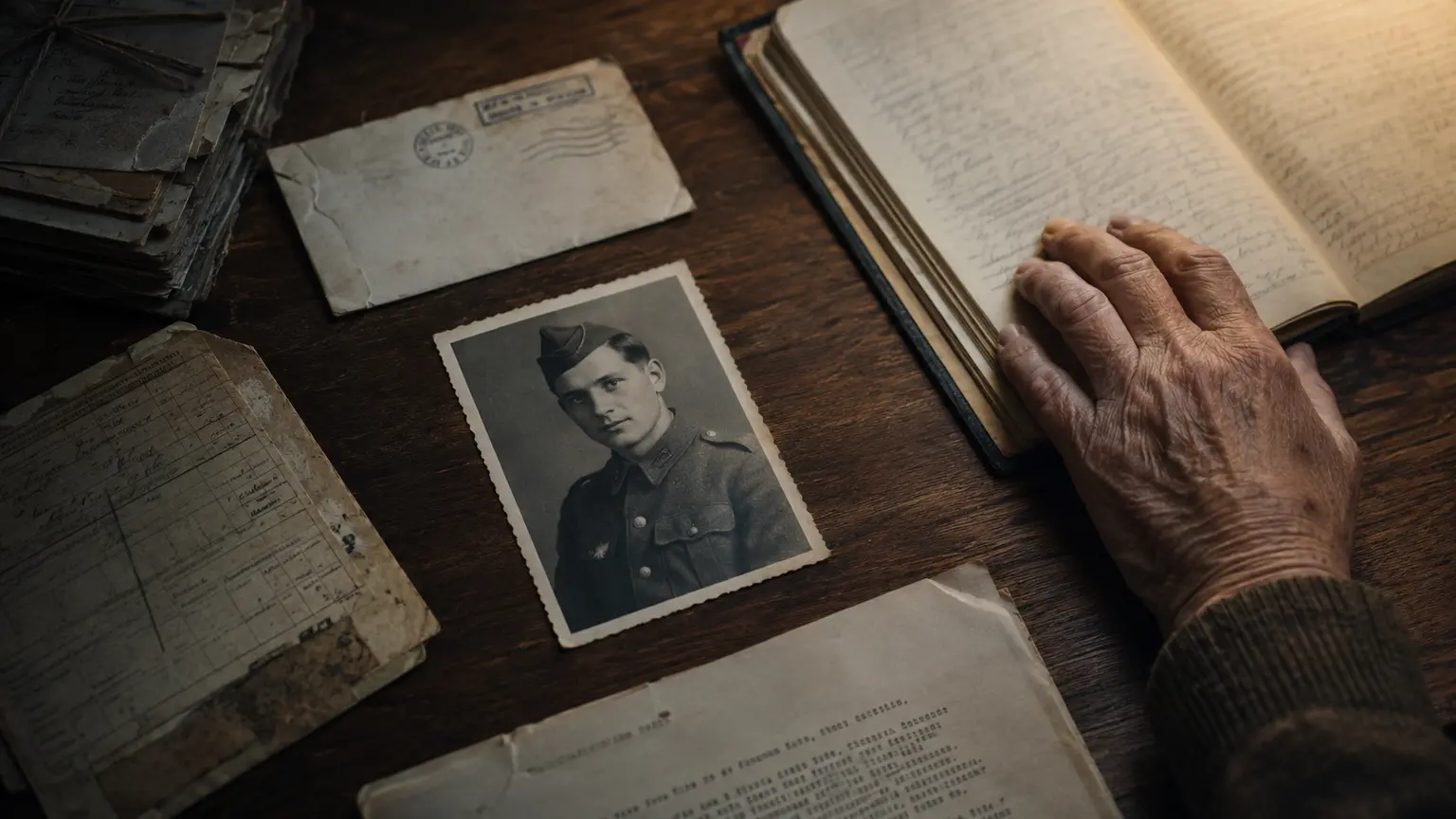
Imagine a soldier. Decades after the war is over, all that remains of his life is a solitary photograph, a yellowed newspaper clipping, a folder of military records, and a handful of letters.
The information has survived.
A future observer studies the photograph and sees a hero—someone brave, strong, and honorable.
Yet the soldier himself may have remembered that exact moment with entirely different words: fear, loss, regret, grief.
The information remained static. The understanding transformed.
The Anatomy of Meaning
This distinction matters because data tells us only what happened. Understanding is born from what we believe that data means.
A photograph, a diary, a voice recording—even a repository of a thousand digital documents—remain nothing more than information. Understanding is something entirely different. It is not found inside the archive; it is created by the observer. It emerges only at the intersection of information, perspective, and human experience.
This is why two people can look at the exact same image and arrive at entirely different truths. The pixels are identical, but the meaning is not. Where one person sees a celebration, another sees a sacrifice. Where one sees success, another feels the sting of loss. Neither observer is wrong; they are simply filtering the same raw data through different lenses.
This is where the idea of preserving our history—our memory continuity—becomes complicated.
For generations, we have obsessed over preserving the artifacts. We save the videos, the letters, the voice recordings, and the documents. These things are vital, but information alone does not possess the power to create understanding. It only creates the possibility of it.
A wedding photograph does not contain the marriage. A diary does not contain the life.
The photograph is not the memory; it is a key. The diary is a key. The recording is a key. Their purpose is not to store a lived experience, but to provide a route back toward it.
The Catalyst of Perspective
Whether understanding actually awakens depends entirely on perspective. Perspective acts as a catalyst; without it, information remains inert.
Show a single wedding photograph to ten different people, and you will unlock ten different universes. The bride remembers the heat of the room; the groom remembers his racing heart; a parent remembers a ghost from the past; a friend recalls a whispered joke. The key remains unchanged. The understanding multiplies.
One photograph. Different meanings.
The key remains unchanged. The understanding multiplies.
This explains why some archives feel alive and rich, while others feel empty and cold. Two collections can contain the exact same amount of data, yet one stirs the soul while the other leaves us numb. The difference is rarely the quality of the information—it is the quality of the perspective attached to it. It requires names, stories, interpretations, and context. It requires the messy ingredients of human experience.
The Purpose of the Past
Because of this, our connection to history can never be perfect.
No matter how many photographs we rescue, no matter how many videos we upload, or how many oral histories we record, we can never truly become the people who originally stood in those moments. We cannot step inside the skin of the soldier, the bride, or the grandparent. The past will always remain partially locked away from us.
But this does not mean the effort fails. It simply means we have misunderstood the objective.
The goal of memory is not perfect reconstruction. The goal is deeper understanding.
Perhaps that is the ultimate lesson: perfect understanding may be impossible, but deeper understanding is not.