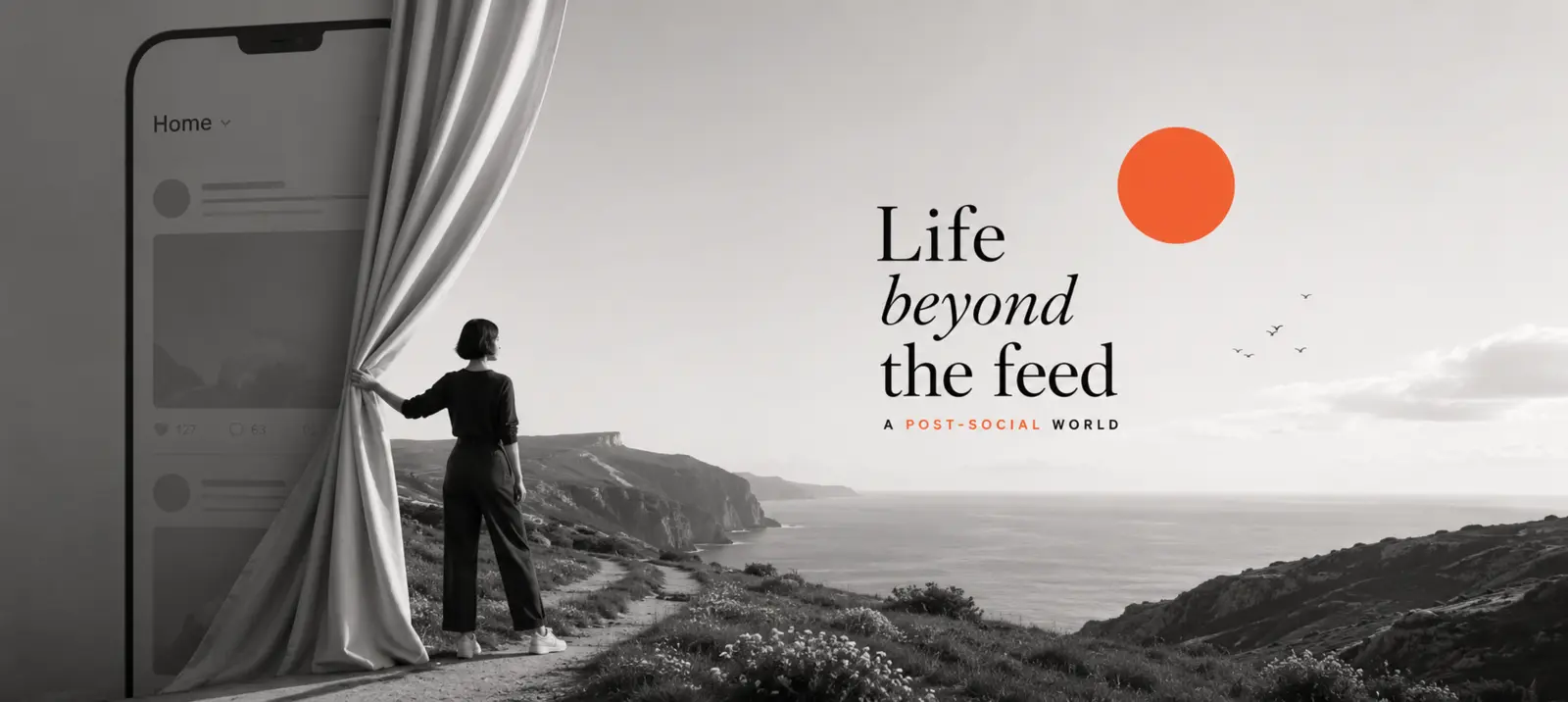
There is a strange contradiction at the heart of modern life.
We have never been more connected. Yet surveys across much of the developed world continue to report rising loneliness, declining social trust, and a growing sense of disconnection.
The internet connected us. Social media connected us. Our phones connected us. So why do so many people feel as though something important has quietly slipped away?
Perhaps connection and closeness are not the same thing.
Connection Is Not Closeness
A person can be connected to thousands of people and still feel alone. A family can sit together in the same room and experience entirely different worlds.
The technology itself is not necessarily the problem. The problem is that we often mistake access for presence.
Attention Is a Choice
Today, attention has become one of the most valuable commodities in the world. Entire industries compete for it. Notifications compete for it. Algorithms compete for it.
Life rarely changes all at once. Instead, it changes minute by minute. A conversation interrupted. A meal half shared. A sunset viewed through a screen. A child waiting for a parent to finish reading something that neither of them will remember tomorrow.
The most important changes in society rarely announce themselves. They simply become normal.
Every moment spent somewhere is also a moment not spent somewhere else.
What are we not noticing while we are looking elsewhere?
Ordinary Life Is the Point
The answer is often ordinary life. And ordinary life has a habit of becoming important later.
People rarely treasure the moments they expected to treasure. The events that become emotionally significant are often remarkably small: a parent laughing in the kitchen, a grandparent telling the same story, children playing in a garden, a family meal.
The ordinary becomes extraordinary through absence.
Modern life increasingly encourages us to document experiences, discuss experiences, share experiences and optimise experiences — sometimes at the expense of actually living them.
There is an important difference between recording a moment and experiencing it.
A photograph can preserve a memory. It cannot replace one.
What Life Beyond the Feed Means
Life beyond the feed is not a call to abandon modern life. It is not an argument against smartphones. It is not a nostalgic fantasy about returning to a simpler era.
The question is not whether technology belongs in our lives. The question is whether it occupies more space than it deserves.
Intentional Technology, Not Rejection
A healthy relationship with technology requires intention. The ability to choose rather than react.
Not every moment must be shared. Not every thought must be published. Not every experience must become content.
Some moments gain value precisely because they remain personal. Private. Unperformed. Human.
The most meaningful parts of life usually exist beyond the screen — in conversations, relationships, traditions, stories, places and memories.
The feed never truly ends. There will always be another notification, another update, another distraction.
Life, however, does end.
Which makes attention one of the most important choices any of us will ever make.
Because when people look back on their lives, they rarely wish they had spent more time scrolling. They wish they had spent more time noticing.
Life beyond the feed is not a destination. It is a decision.
A decision to occasionally look up, pay attention, and remember that the most valuable moments in life are often already happening quietly in front of us.