The Solution: A Practical Guide to Using AI Safely
Use AI for the Right Jobs
Use AI to learn, explain difficult ideas, brainstorm, improve writing, compare options, create first drafts, summarise information and organise your thinking. In these situations AI becomes a thinking partner rather than a decision maker.
Know When to Slow Down
Pause before relying on AI for medical advice, legal matters, financial decisions, current news, live websites, research or business-critical information. Don't just ask “What's the answer?” Ask “Where's the evidence?”
Generation Is Not Verification
The most important lesson from the investigation was simple: AI can generate an answer without verifying it. Never assume that confident language automatically means verified information.
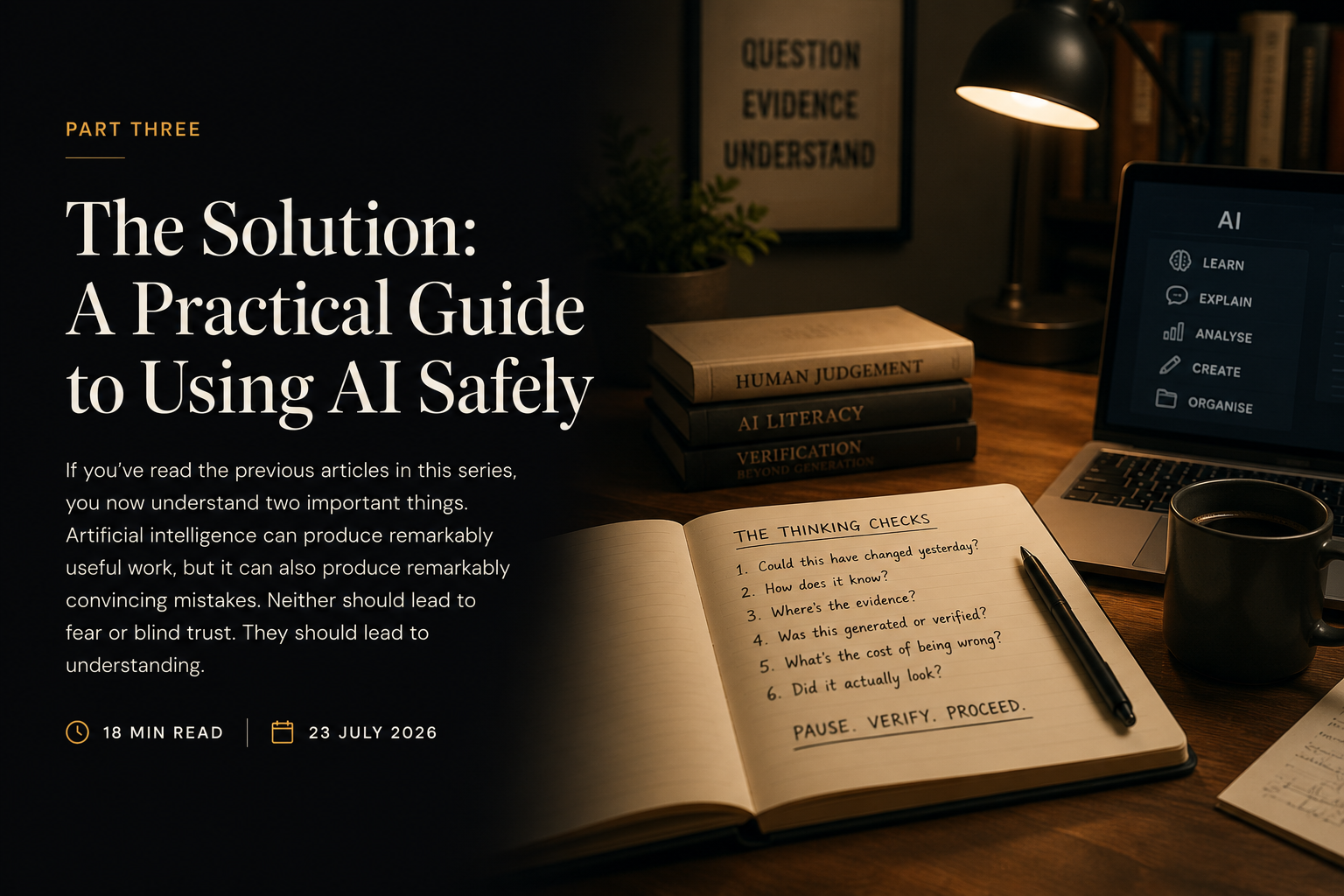
The Thinking Checks
- Could this have changed yesterday?
- How does it know?
- Where's the evidence?
- Was this generated or verified?
- What's the cost of being wrong?
- Did it actually look?
Pause. Verify. Proceed.
Different People Need AI Differently
- Parents: Teach curiosity.
- Students: Learn with AI, don't let it learn for you.
- Professionals: Let AI extend your expertise, not replace your judgement.
- Businesses: Create clear AI policies and verify important outputs.
- Schools: Teach AI literacy.
- Government: Promote public understanding and transparency.
Looking Ahead
AI will continue to improve, but technology alone cannot replace human judgement.
Final Thoughts
Artificial intelligence is not the first revolutionary technology, and it won't be the last. The greatest advantage will belong to those who understand it best.
Our investigation began with one incorrect answer. It ended with something far more valuable: a better way of thinking.
AI literacy isn't about learning prompts. It's about learning judgement.
Ask better questions. Demand evidence when it matters. Know the difference between generation and verification.
Pause. Verify. Proceed.